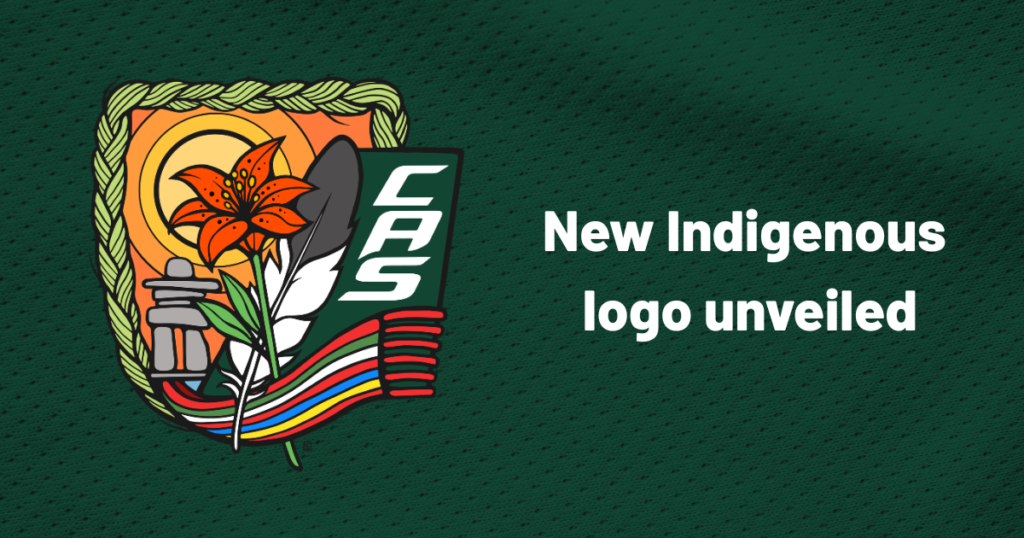
The Coaches Association of Saskatchewan (CAS) is excited to announce a new Indigenous logo, designed by Chris Chipak of Red Pheasant Cree Nation (Treaty 6).
The logo will be showcased through CAS’ Indigenous Coaches and Officials Program, as well as through CAS partnerships with other Indigenous-led organizations and programming, such as the Aboriginal Coaching Modules, the Canada Games Aboriginal Apprenticeship Program and more.
“We are very proud to share this new logo,” said Nicholas Baker, CAS Executive Director. “It is a reflection of the tapestry of the Indigenous peoples who help make up the more than 20,000 coaches in Saskatchewan donating their time, skills and knowledge for the benefit of athletes in communities across the province.”
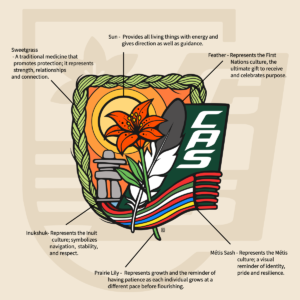
Following the shape and style of the primary CAS logo, the Indigenous logo features elements that highlight powerful and important meaning within Indigenous culture.
Sweetgrass: A traditional medicine that promotes protection; it represents strength, resilience and connection.
Sun: Provides all living things with energy and gives direction as well as guidance.
Feather: Represents the First Nations culture, the ultimate gift to receive and celebrates purpose.
Métis Sash: Represents the Métis culture; a visual reminder of identity, pride and resilience.
Prairie Lily: Represents growth and the reminder of having patience as each individual grows at a different pace before flourishing.
Inukshuk: Represents the Inuit culture; symbolizes navigation, stability and respect.
About the designer: Chris Chipak is a visual artist and illustrator. He is a member of the Red Pheasant Cree Nation and currently resides in Saskatoon, SK. Chris uses his art to promote cultural education and represent the Treaty 6 territory. His art directly reflects his desire to tell stories and promote connections to Indigenous culture. He is a graduate from the University of Saskatchewan with a Bachelor of Education degree and continues to embrace being a lifelong learner.